Florida Written Threats Case
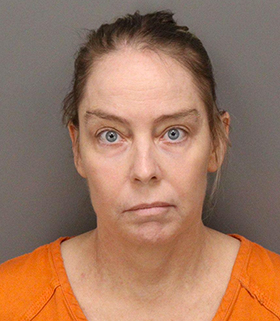
Florida Woman Tammy Baldino Charged Over Texted Death Threats
When officers confronted the Palm Harbor woman about one series of 3 a.m. messages, the arrest affidavit says she replied that threatening texts were simply what girls do.
Threat date: July 2, 2026 | Arrest date: July 8, 2026 | Initial bond: $20,000

Summary
Two sets of threatening messages and one unusual explanation led to felony charges against a 51-year-old Palm Harbor woman.
Pinellas County investigators alleged that Tammy Baldino sent a male acquaintance messages at approximately 3 a.m. on July 2, 2026, stating that she would kill him and claiming to possess a gun and a bullet bearing his name.
Police recovered the texts from Baldino’s phone. The affidavit says she acknowledged that nobody else used the device and that it remained in her sole possession.
When confronted, Baldino allegedly responded, “That’s just what girls do.” The phrase became the headline hook, but it did not alter the legal question of whether the messages constituted a true written threat.
Investigators also connected Baldino to threatening messages sent the previous month to an ex-boyfriend. Those communications allegedly referred to friends who could end his existence and threatened shotgun violence.
The former boyfriend told police he feared Baldino might act directly or involve people associated with drugs.
Baldino was arrested on July 8 and booked on two felony counts. Her bond in the threats case was set at $20,000.
At the time, she was already free on $5,500 bond in a separate case involving DUI and unlawful possession of nitrous oxide. That earlier bond was revoked after the new arrest.
Florida’s written-threat statute covers certain electronic communications that threaten death or bodily harm. The prosecution must prove more than offensive language; it must establish that the charged communication meets the statutory and constitutional requirements for a criminal threat.
The victims were both adult men. Their full identities and addresses are not reproduced.
1. The Crime
The allegations concern written or electronic threats transmitted by text message.
One victim received messages on July 2. A second man, identified as an ex-boyfriend, allegedly received another series in June.
The phone evidence and Baldino’s alleged statements formed the core of the arrest affidavits.
2. Crime Location
The July 2 affidavit identifies an address in Weeki Wachee connected with the first victim. Baldino lived in Palm Harbor and was booked in Pinellas County.
Because electronic communications cross physical boundaries, the relevant locations can include where a message was sent, received and investigated.
3. Date and Time of the Crime
- June 2026Baldino allegedly sent threatening messages to an ex-boyfriend.
- July 2, 2026, around 2:52 a.m.A second man allegedly received threats involving a gun and a bullet with his name on it.
- July 8, 2026Baldino was arrested on two felony counts.
- July 9, 2026The new arrest was reported, and the earlier $5,500 bond was revoked.
- July 30, 2026No final case resolution had been located.
4. Police Department
The investigation and booking involved Pinellas County law-enforcement and court records.
5. Suspect Name
The defendant is Tammy Baldino.
6. Suspect Age
Baldino was 51 years old.
7. Charges
| Charge or Issue | Classification | Reported Basis | Status |
|---|---|---|---|
| Written or electronic threat to kill or cause bodily harm | Felony count | July 2 texts allegedly threatened death and referenced a gun. | Pending |
| Written or electronic threat to kill or cause bodily harm | Felony count | June texts to an ex-boyfriend allegedly threatened violence through Baldino or associates. | Pending |
| DUI and unlawful possession of nitrous oxide | Separate earlier case | Baldino was on bond in this case at the time of the threats arrest. | Pending; bond revoked |
8. Bond Amount
The threats case carried $20,000 bond when first reported.
The separate $5,500 bond in the earlier case was revoked, which could keep Baldino in custody even if the new bond were posted.
9. Conviction
No conviction had been reported in either July 2026 threat count.
10. Sentence
No sentence had been imposed.
11. Outcome
The immediate outcome was Baldino’s arrest and loss of pretrial release in the earlier case.
The court must separately resolve the admissibility, meaning and criminal character of each set of messages.
12. Victim
Two adult men were identified as recipients of the alleged threats. One was described as an acquaintance and the other as an ex-boyfriend.
Both reported fear or concern about the possibility that the threats could be carried out.
Victim Name
The first names or identifying details of the men are omitted.
Victim Age
One victim was reported to be 51. The other man’s age was not publicly stated.
Why Text Threat Cases Are Fact-Specific
Courts examine the exact language, context, audience and surrounding conduct when deciding whether a message is a criminal threat.
A bizarre explanation, anger or intoxication does not automatically prove or defeat the charge. The state must satisfy the statute while respecting constitutional limits on punishing speech.
Case Context
The phrase “that’s just what girls do” tries to shrink threatening messages into casual drama, but a claimed gun and a named bullet are not ordinary social static. The criminal case still depends on context and proof, not a headline. The useful lesson is simpler: texts preserve language, time and ownership in a way spoken arguments often do not. A 3 a.m. message can become a bright little rectangle of evidence by breakfast.
Sources
This article is based on police records, court materials, statutes and published
reporting available as of July 30, 2026. Arrests and criminal charges are not
proof of guilt. Victim addresses and unnecessary identifying information have
been omitted. Court records may change after publication.