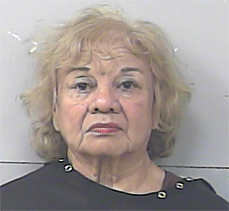
Judith Barrantes was arrested on a misdemeanor battery charge after a family dispute in Port St. Lucie that police said grew out of efforts to stop her from communicating with a scammer posing as actor Liam Neeson.
The scam dispute behind the arrest
Police were called to a Port St. Lucie, Florida home on Wednesday, June 3, 2026, for a domestic disturbance involving 76-year-old Judith Barrantes and relatives. According to the arrest affidavit summarized by The Smoking Gun, family members told officers that Barrantes had been communicating with a person falsely claiming to be actor Liam Neeson and had been sending the person money.
Barrantes’s daughter, Luz Levangie, told police that she believed her mother was being defrauded. The family dispute escalated after the daughter took Barrantes’s phone and began messaging the person on the other end. Police said Barrantes retrieved the phone and struck her daughter in the head and arm. A male relative gave officers a similar account of the confrontation.
The criminal charge in this article is not fraud. Barrantes was described by relatives as the target of the impersonation scam, while the charge against her arose from the alleged physical contact during the argument over the phone. Keeping those roles separate prevents the story from falsely portraying her as the person operating the scam.
What investigators did and did not establish
The arrest affidavit did not identify the person who was pretending to be Neeson, explain how the contact began or state how much money had been sent. It also did not say whether a separate fraud investigation had identified a suspect. Those unanswered questions are important because romance and celebrity-impersonation scams often cross jurisdictions and can involve anonymous online accounts, but this case-specific source did not provide enough information to trace the scheme further.
For the battery allegation, police relied on statements from the daughter and another relative. The public report does not describe a significant injury, a weapon or medical treatment. Barrantes was arrested on a misdemeanor charge rather than a felony assault count. She was booked into the county jail and released the following afternoon on $250 bond.
The story therefore has two overlapping but legally distinct threads: an alleged impersonation fraud that relatives were trying to interrupt, and a domestic battery allegation arising during that intervention. The existence of the scam context does not prove the battery charge, and the battery arrest does not establish who was behind the scam.
Release and case status
Barrantes was released from custody on June 4, 2026 after the $250 bond was posted. That release is the latest completed substantive event documented in the case-specific report, so June 4 is used as the article date. The old site entry was both thin and categorized as Uncategorized, which obscured the nature of the actual charge.
No later plea, dismissal, verdict or sentence was located in the sources available through August 11, 2026. For that reason, the article says Barrantes was arrested and charged, not convicted. A misdemeanor arrest can still have serious consequences, but the presumption of innocence applies unless a court record establishes a final outcome.
If the fraud investigation later produces an identified scammer or charges against another person, that would be a separate development worth adding. Likewise, any later resolution of Barrantes’s battery case should supersede the current arrest-stage status and case date.
Why the corrected framing matters
A headline built only around a ‘fake Liam Neeson’ story can make it sound as though Barrantes created the impersonation. The verified account says the opposite: relatives believed she was sending money to an impostor and were trying to prevent further contact. The battery allegation began during the resulting struggle over her phone.
The corrected title therefore names Barrantes, describes the arrest and keeps the scam as context rather than the offense she was accused of committing. The category set also removes Uncategorized and adds Crime News plus relevant assault/battery and female categories where those existing WordPress terms are available.
The available record is narrow, but it is enough to tell the story accurately without speculation. It establishes the family members’ statements, the alleged striking, the misdemeanor arrest, the $250 bond release and the absence of details identifying the impersonator. It does not support claims about how much money was lost or whether Barrantes knew the person was a fraudster before the family confrontation.
Case timeline
June 3, 2026: Police responded to the Port St. Lucie home. Relatives described an ongoing celebrity-impersonation scam and said a fight over Barrantes’s phone ended with her striking her daughter.
June 4, 2026: Barrantes was released from county jail after posting $250 bond on the misdemeanor charge.
Current status: No later case-specific disposition for the battery charge, and no identified suspect in the underlying impersonation scam, was located in the available case-specific sources.
Additional record context
The source’s lack of fraud-investigation detail is itself important. It means the article should not guess whether the impersonator was in Florida, overseas, part of a larger network or known to police. It also means the site should not publish an unsourced loss figure. The only supported financial description is the family’s statement that Barrantes had been sending money to the person.
Barrantes’s age and the family’s concern may help explain why relatives intervened, but the article avoids diagnosing her mental state. A relative’s statement that she was not thinking clearly is not a medical diagnosis. The criminal record supports reporting the family concern and the alleged battery, not drawing conclusions about capacity.
Case-specific reporting notes
The June 4 release is used as the latest verified event because it occurred after the confrontation and booking and is specifically documented in the case report. The later publication of retellings does not create a new case date. This keeps the timeline tied to what happened to the defendant rather than to when a website chose to write about it.
The story also avoids presenting the real Liam Neeson as connected to the events. The only supported connection is that an unidentified person allegedly used the actor’s identity while communicating with Barrantes. Nothing in the police account suggests Neeson knew Barrantes, contacted her or had any involvement in the reported fraud.