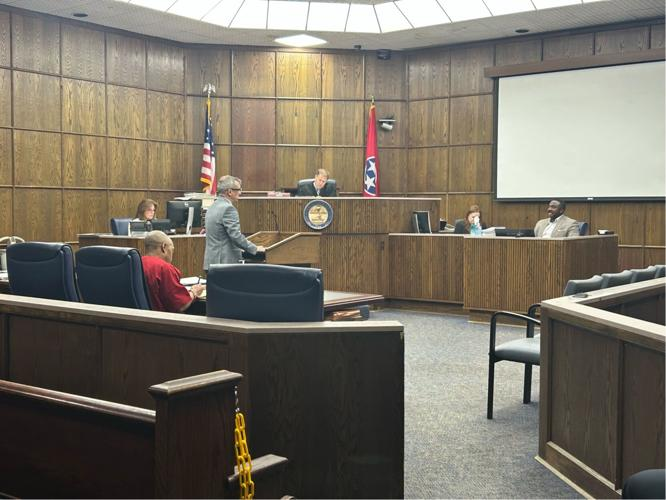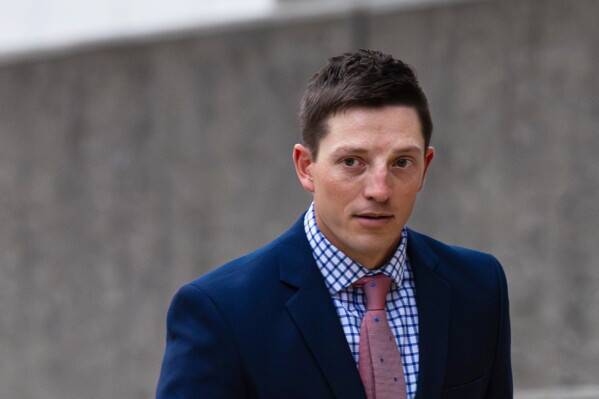
A jury convicted former Franklin County deputy Jason Meade of reckless homicide in Casey Goodson Jr.’s death but could not reach a verdict on the murder charge.
The Crime
A Franklin County jury convicted former sheriff’s deputy Jason Meade of reckless homicide in the fatal shooting of Casey Goodson Jr. Jurors could not reach a unanimous decision on the separate murder count.
Goodson was carrying food toward his grandmother’s home when Meade shot him five times in the back and once in the side. Goodson was licensed to carry a firearm. A gun was found under his body with its safety engaged.
Meade maintained that Goodson displayed or pointed a gun and that the shooting was justified. No body-camera recording captured the encounter, and other witnesses did not confirm Meade’s account of Goodson pointing the weapon.
The second trial produced a partial verdict after an earlier trial ended in a mistrial. The reckless-homicide conviction means jurors found that Meade recklessly caused Goodson’s death.
Because jurors deadlocked on murder, prosecutors considered whether to try that count again. Sentencing on the conviction was delayed while the parties addressed the unresolved charge and procedural order.
Goodson’s family had previously reached a civil settlement with the county. The civil case and criminal prosecution use different legal standards and should not be treated as the same judgment.
Case Details
| Crime Location | The doorway of Casey Goodson Jr.’s grandmother’s home in Columbus, Ohio |
|---|---|
| Date and Time | December 4, 2020; reckless-homicide verdict returned May 7, 2026 |
| Police or Investigating Agencies | Franklin County Court of Common Pleas, Franklin County Prosecutor’s Office and special prosecutors |
| Suspect or Subject | Jason Meade (age 47) |
| Charges or Legal Issues | Reckless homicide, resulting in a guilty verdict; Murder, resulting in a mistrial after the jury could not agree |
| Bond or Detention | Bond was reinstated while sentencing and the unresolved murder count were under consideration |
| Conviction | Convicted of reckless homicide. |
| Sentence | Sentencing had been delayed in the reviewed reports; no final sentence is stated here. |
| Current Outcome | Partial verdict: reckless-homicide conviction and mistrial on the murder count, with possible further proceedings. |
| Victim Information | Casey Goodson Jr., 23, was shot five times in the back and once in the side while entering his grandmother’s home. |
Charges and Legal Issues
- Reckless homicide, resulting in a guilty verdict
- Murder, resulting in a mistrial after the jury could not agree
Understanding the Court Status
An appellate ruling evaluates whether the trial complied with governing law. A reversal does not necessarily declare factual innocence, and an affirmance does not prevent every form of later review. The remedy depends on the precise error and the counts affected.
When a jury reaches only a partial verdict, the convicted count remains in place while prosecutors decide whether to retry an unresolved count. Sentencing, bond and scheduling decisions may be delayed while the court determines the correct procedural order.
The appellate and trial records should be read together. A headline may describe the overall dispute, but the controlling judgment identifies which offense was proven, which count remains unresolved and what issues can still be litigated.
Evidence, Context and Unresolved Questions
The central events were reported at The doorway of Casey Goodson Jr.’s grandmother’s home in Columbus, Ohio. The agencies publicly associated with the matter are Franklin County Court of Common Pleas, Franklin County Prosecutor’s Office and special prosecutors. Their records may include dispatch audio, photographs, interviews, warrants, surveillance material, forensic submissions and medical or booking documentation.
The reported legal issues include Reckless homicide, resulting in a guilty verdict, Murder, resulting in a mistrial after the jury could not agree. Each offense has distinct elements. Proof that supports one count may not establish another, particularly when intent, causation, justification, accomplice liability or a defendant’s precise role is disputed.
The public victim information is: Casey Goodson Jr., 23, was shot five times in the back and once in the side while entering his grandmother’s home. Victims and surviving relatives may receive notice of hearings, provide impact statements and request restitution where the law allows. They may also choose to keep medical and personal details outside the public record.
The currently reported outcome is: Partial verdict: reckless-homicide conviction and mistrial on the murder count, with possible further proceedings. That description is a procedural snapshot, not a prediction. Hearings can be rescheduled, charges can change and later evidence may alter how investigators or lawyers describe the case.
A reliable timeline separates the incident date from the dates of arrest, indictment, plea, verdict, sentence or appeal. News reports sometimes compress those stages into one narrative, which can make an old event appear newly committed when the actual development is a later court filing.
Physical evidence must be authenticated and interpreted in context. Firearms, cartridge cases, wounds, vehicle damage, phone records and location data can narrow possibilities, but expert testimony may be needed to explain what the evidence can and cannot establish.
Witness accounts can be essential and imperfect at the same time. Stress, distance, lighting, prior relationships and conversations with other witnesses may affect memory. Investigators commonly compare statements with recordings, digital records and scene evidence before relying on them.
Motive may explain an investigative theory but does not replace proof of the charged conduct. A family conflict, robbery theory, relationship dispute, alleged retaliation or financial argument must still be connected to the accused through admissible evidence.
Photographs require the same discipline as written reporting. A booking image documents an arrest, while a scene photograph documents a location or police response. Neither proves guilt. A generated editorial illustration must be clearly identified and must not be presented as the real accused, victim or crime scene.
Several news stories may originate from the same police release. The number of links therefore does not automatically equal independent confirmation. A stronger record combines official material with local reporting, court coverage and later outcome reporting when those sources are publicly available.
Violent incidents affect more than the names in a court caption. Families can face funeral costs, medical treatment, lost income and trauma. Neighbors, coworkers and first responders may also carry lasting effects after witnessing or responding to the event.
Verified updates should be attached to the same case record when the controlling facts materially change. Unattributed screenshots, speculative social-media claims and recycled headlines should not be used to fill gaps in the public evidence.
A court record should be preferred over a headline when the two use different terminology. Statutes distinguish between completed and attempted offenses, principal and accomplice liability, and intentional and reckless conduct. Those distinctions can materially change the maximum sentence and the factual finding associated with a conviction.
The absence of a publicly reported lawyer, bond amount or hearing date does not establish that the information does not exist. Local docket systems and newsrooms update at different speeds. Later coverage should confirm those procedural details from the controlling court rather than converting an early omission into a permanent fact.