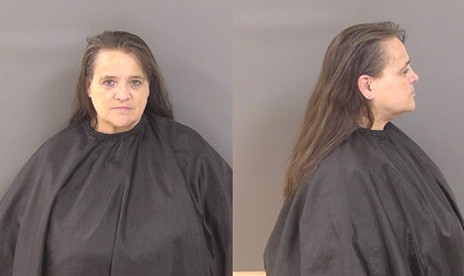
Annette Nichols was charged with misdemeanor theft after investigators said a weeks-long pattern of skip-scanning banana chips at Publix stores culminated in her June 8, 2026 arrest near Vero Beach.
A highly specific retail-theft pattern
Investigators said 59-year-old Annette Nichols repeatedly targeted bags of banana chips at a Publix near her Vero Beach, Florida home. According to the arrest report summarized by The Smoking Gun, a deli manager told deputies that the same merchandise had gone missing on six separate occasions over several weeks. The bags cost about $6.49 each, and the cumulative losses were estimated at roughly $300.
Police described a skip-scanning pattern rather than a conventional conceal-and-run theft. Nichols allegedly used self-checkout and paid for some items, including some banana chips, while failing to scan additional bags before leaving. That distinction matters because the accusation depended on repeated checkout behavior and store observations, not on a single bag discovered outside the store.
Store employees became familiar enough with the alleged pattern that the deli manager reduced the number of banana-chip bags placed on the shelf. The unusual product made the case memorable, but the underlying allegation was a repeated retail-theft scheme involving unpaid merchandise.
The June 8 arrest and vehicle search
The pattern ended with Nichols’s arrest on Monday, June 8, 2026. Police said a search of her vehicle turned up 13 bags of banana chips. Investigators believed some of those bags had been taken from the Vero Beach Publix that day and that others came from a Publix in a neighboring county. The available report does not establish that every bag in the vehicle was stolen, so the article does not treat all 13 as proven stolen property.
When confronted, Nichols reportedly admitted stealing banana chips and expressed frustration with her own behavior. Because those statements appear in an arrest report, they are relevant to probable cause, but a defendant’s reported statement is still part of a criminal case record rather than a substitute for a court judgment.
Nichols was booked on a misdemeanor theft charge and later released after posting $150 bond. The source also noted a 2024 retail-theft conviction involving skip-scanning at a different retailer. That prior case is separate from the 2026 allegation and does not itself prove the new charge.
Why the case date is June 8
The original site version was under the 1,000-word publication floor and did not clearly anchor the story to the verified arrest date. The strongest case-specific reporting was published June 9 and described the arrest as having occurred the previous night. That places the completed arrest event on June 8, 2026, which is used as the WordPress case date.
No later plea, dismissal, trial result or sentence in the 2026 banana-chip case was located in the case-specific sources available through August 11, 2026. The article therefore uses charge language and does not suggest that Nichols was convicted of the new accusation. If a later court disposition becomes available, it should replace this arrest-stage status.
The date standard also avoids a common problem on imported crime sites: using the day an article was uploaded rather than the day something actually happened in the case. Here the arrest is a completed, identifiable event and provides a defensible publication date.
Evidence and limits of the public record
The accessible reporting cites a store manager, the pattern of prior suspected incidents, self-checkout behavior, the bags recovered in the vehicle and Nichols’s alleged admission. Those pieces together explain why police believed there was probable cause for misdemeanor theft. The public source does not include complete surveillance video, transaction logs or the full court docket.
That limited source set is why this article does not invent exact quantities for each visit or claim that every suspected earlier incident resulted in a separate charge. The reported criminal case was a misdemeanor theft matter arising from the pattern described by investigators. The source also does not say whether Publix recovered all merchandise or received restitution.
A strange object of theft can distract from the basic evidentiary questions. Accurate reporting keeps the banana-chip detail because it is genuinely case-specific, while still centering the things that matter legally: what police say happened, what evidence they described, the charge, bond and known procedural status.
Case timeline
Weeks before June 8, 2026: Publix employees reported repeated losses of banana chips and said the suspected pattern involved self-checkout skip-scanning.
June 8, 2026: Nichols was arrested. Police reported finding 13 bags of banana chips in her vehicle and said she admitted to thefts. She was charged with misdemeanor theft and later posted $150 bond.
Current status: No later case-specific disposition was located in the available case-specific sources, so the article remains an arrest-and-charge report.
Additional record context
The report’s reference to a prior 2024 skip-scanning conviction is relevant chiefly because investigators noted a similar retail method. It remains a separate judgment involving a different retailer. The 2026 Publix charge still required its own proof and could not be treated as automatically established because of the older case.
Nichols’s reported occupation and personal circumstances are not needed to explain the charge, so they are omitted. The useful record is the store’s repeated observations, the self-checkout allegation, what police said they found in the car, the reported admission, the misdemeanor charge and the bond release.
Case-specific reporting notes
The $300 figure reported by investigators represents the approximate cumulative value of the alleged pattern, not the price of the 13 bags found in the car on one day. Keeping those numbers separate prevents an arithmetic shortcut that the source itself does not make. Some bags in the vehicle were believed to have come from more than one Publix location, further complicating any attempt to assign a precise one-day loss.
The source also makes clear that Nichols did sometimes pay for banana chips. The allegation was that she scanned fewer bags than she removed from the store. That detail is important because it describes the suspected method and helps distinguish the case from an accusation that she simply concealed every item she possessed.