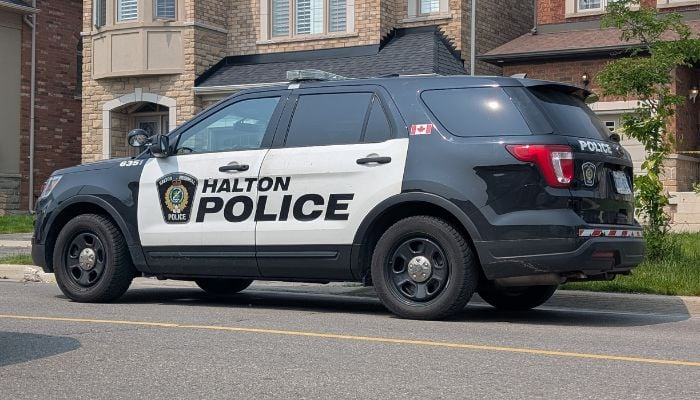
Hamilton police say a 15-year-old boy surrendered in the Stoney Creek double-homicide investigation, and a 34-year-old woman was also arrested on accessory and obstruction charges. Youth-identification restrictions remain in force.
Two Teenagers Killed on Candlewood Drive
Hamilton Police Service said officers were called to the Tabby Town Co-op Housing complex at 191 Candlewood Drive in Stoney Creek at about 2:25 a.m. on July 29, 2026 after reports of gunfire. Officers found two teenage boys suffering from gunshot wounds. Both were taken to hospital and died from their injuries.
Police identified the victims as Abdulmalek Shibli, 18, and Afef Binafif, 16, both of Hamilton. Early reporting described investigators examining whether the gunfire followed an earlier disturbance involving bear spray. That possible connection remains part of the investigative theory and should not be stated as a proven motive unless later court evidence establishes it.
Youth Suspect Surrenders
Police temporarily received authority to publish identifying information about a 15-year-old suspect while they were trying to locate him. On the evening of August 2, Hamilton police announced that the boy had turned himself in. Once the youth was in custody, the service instructed the public and media to remove identifying information and images that had been released for the purpose of locating him.
The official police release says the 15-year-old faces two counts of second-degree murder and four counts of attempted murder with a firearm. Because the accused is a minor, this article does not publish his name. The decision to withhold the identity is not an editorial guess; it follows the youth-reporting restriction expressly noted by police after the arrest.
Adult Woman Also Charged
The August 2 update materially expanded the case beyond the wanted-teen headline. Police said they had also arrested a 34-year-old woman and charged her with accessory after the fact to murder and obstructing police. The reviewed public sources did not identify her in a way that should be repeated here, and they did not establish that she participated in the shooting itself.
Accessory-after-the-fact and obstruction allegations address conduct after or during an investigation, not necessarily participation in the underlying killings. Keeping that distinction clear is important. The teenager is accused on murder and attempted-murder counts. The adult woman faces separate allegations tied to what police say happened after the homicides and during the effort to investigate or locate a suspect.
One Real Firearm and One Imitation
Hamilton police also corrected an important factual detail in the same update. Investigators said only one firearm was discharged during the incident and that a second gun involved in the exchange was an imitation firearm. That clarification matters because early reports described an exchange of gunfire without the benefit of the later investigative finding.
The fact that one item was an imitation does not by itself resolve who possessed it, who fired the real weapon, or how the attempted-murder counts are allocated. Those questions depend on witness accounts, surveillance footage, ballistic evidence and other material that may be tested in court. The article therefore reports the police clarification without using it to infer a shooter or a final updated article of the encounter.
Charges and Surviving Targets
The two second-degree murder counts correspond to the deaths of Shibli and Binafif. Police also announced four attempted-murder-with-a-firearm counts. The existence of attempted-murder counts indicates investigators allege additional people were targeted or placed within the charged shooting episode, but the reviewed sources do not support publishing unnecessary identifying details about surviving young people.
Each count requires proof of its own elements. A double-homicide prosecution can involve overlapping evidence, but a court must still assess the evidence tied to each victim and each alleged attempted killing. The youth’s surrender changes his custody status; it does not eliminate the prosecution’s burden or convert police allegations into findings of guilt.
Current Status
August 2 is the controlling update date because both the youth’s surrender and the adult woman’s arrest were completed that day. Police said both were expected in court on August 3, but a scheduled appearance is not treated as an outcome merely because it was placed on a calendar. No later plea, adjudication, dismissal or sentence was located in the reviewed sources through August 11.
The investigation remained active and Hamilton police continued asking witnesses to contact detectives. Any later charge against another person, amendment of the youth counts, bail or detention ruling, plea or trial outcome belongs in this same article. That keeps the public record centered on one case and avoids preserving an obsolete wanted notice after the suspect surrendered.
What Police Have and Have Not Established Publicly
The August police update narrows some facts while leaving other important questions open. Investigators publicly confirmed the identities of the two deceased teenagers, the charges against the 15-year-old, the separate charges against the 34-year-old woman and the fact that one of two weapons involved was an imitation. They did not publicly resolve in the reviewed release who possessed each weapon, who fired the fatal shots, or how each attempted-murder count corresponds to a surviving person. Those unresolved points belong to the evidence phase of the prosecution rather than to speculation in a news story.
The earlier bear-spray disturbance also needs careful treatment. Police discussed retaliation as a line of inquiry after the shooting, but an investigative possibility is different from a proven motive. If prosecutors later place that theory in charging documents or present evidence connecting the earlier incident to the Candlewood Drive gunfire, the article can be updated with that verified link. Until then, the responsible description is that detectives examined a possible connection while continuing to appeal for witnesses and information about the shooting itself.
Youth Court Reporting Limits
The youth status also affects how later updates should be handled. If a court changes the charges, orders detention or enters an adjudication, the article can report the legal result without republishing identifying material that police ordered removed after the arrest. The victims may be named because police publicly identified them, while the accused teenager remains protected. That distinction keeps the article accurate without turning a temporary wanted-person exception into a permanent publication of a minor’s identity.
Sources
- Hamilton Police Service, August 2, 2026
- CHCH, August 3, 2026
- Toronto Sun, Stoney Creek double-homicide reporting
- CP24, July 29, 2026 investigation report
Disclaimer: This article summarizes case-specific police, prosecutor, court and news reporting available through August 11, 2026. Unresolved criminal charges are allegations unless a valid plea or court judgment establishes guilt.