
The Crime
| Crime Location | Rochester, New York |
|---|---|
| Date and Time | 2026-07-17 |
| Investigating Agency | Investigating police, prosecutor, court, or corrections agency identified in the cited case report. |
| Suspect or Defendant | The person or persons identified in the cited case report |
| Age | Not reliably reported in the available source set. |
| Charges / Legal Posture | Murder, homicide, or related allegations/investigation as reported |
| Bond or Custody | A verified current bond amount was not available in the available source set. |
| Conviction | The cited report describes a trial verdict or conviction; the article preserves the disposition reported by that source. |
| Sentence | The cited report describes a sentence; the article uses the term stated by the source and does not substitute a statutory maximum. |
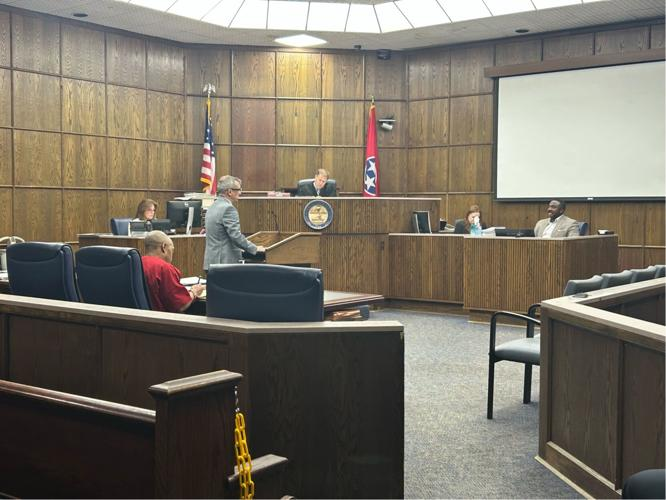
| Current Outcome | Michael Garcia was sentenced to 25 years to life for the Rochester shooting that killed 17-year-old East High student Danyelisse Pabon-Cubero and wounded another man. |
| Victim | Victim information is limited to what is publicly identified in the cited case report. |
Crime Location
The reported case location is Rochester, New York Location is used to identify the correct agency and court system, but this article avoids publishing a private residence or other unnecessary identifying detail merely because it may appear in an underlying record.
A precise location can matter to jurisdiction, scene updated article, search authority and venue. When the available reporting gives only a city, county or general site, this article does not invent a street address or building number. The geographic description remains as specific as the reviewed case source supports.
Date and Time
The relevant reported date or period is 2026-07-17. Incident dates and procedural dates are kept separate because an arrest, plea, verdict or sentence can occur months or years after the underlying event.
Time can connect emergency calls, surveillance, medical treatment, phone records, arrests and court deadlines. Where the source gives only a date or approximate period, no more precise time is inferred. Later case events belong in the chronology below rather than being folded into the incident date.
Police Department and Investigating Agency
Multi-agency investigations require careful attribution. Evidence can pass through dispatch systems, hospitals, laboratories, local police, state or federal agencies and courts. The article therefore distinguishes an investigative allegation from a charging decision and a charging decision from a judicial finding.
Suspect or Defendant Name and Age
Identifying information is intentionally limited for juveniles and protected victims. An adult name is used only when the cited public record supports it. If the current source set does not reliably provide a name or age, the field stays unresolved rather than being filled from a different case, an unverified social-media account or a guess.
Charges and Legal Posture
Closely related counts can require different proof about intent, injury, possession, causation, participation or the identity of a victim. Future updates should replace obsolete charge language with the verified current formulation instead of stacking conflicting versions of the same prosecution.
A criminal charge is not proof of guilt. A defendant remains presumed innocent unless guilt is established through a valid plea or court judgment. When the matter is an unsolved investigation rather than a prosecution, the article does not convert investigative suspicion into a charge.
Bond Amount or Custody Status
Bond and pretrial detention concern release before final judgment and should not be confused with a verdict. Courts may consider statutory rules, offense severity, public-safety allegations, prior compliance and flight risk. In a post-conviction case, custody may instead flow from a sentence or corrections decision.
When the current source does not reliably state an exact bond amount, the article says so. An arrest does not justify inventing a monetary figure, and a statutory maximum penalty is not treated as a sentence or bond term.
Conviction
The cited report describes a trial verdict or conviction; the article preserves the disposition reported by that source.
A conviction can arise from a guilty plea or a trial verdict. A preliminary-hearing decision, indictment or probable-cause ruling is different. An appellate ruling may affirm, reverse or remand part of a judgment. When there is no conviction, this article does not substitute a prediction.
Sentence
The cited report describes a sentence; the article uses the term stated by the source and does not substitute a statutory maximum.
Potential maximum penalties are not substituted for an actual sentence. Sentencing information should come from a court, prosecutor, corrections record or reliable case-specific reporting of the hearing. If sentencing is scheduled for a future date, that schedule is described without assuming what the judge will impose.
Evidence and Allegations
The investigation or prosecution may rely on the evidence specifically described in the cited case report.
Any later court filing, plea, verdict, sentence, dismissal, appellate ruling, or corrected agency release should supersede an older procedural description when verified.
Digital material deserves the same caution. Phone data, messages, social-media entries, camera footage, vehicle records and account information can help establish chronology or contact between people, but investigators still must connect a record to a person and explain its significance. A lead described in an investigative report is not automatically proof beyond a reasonable doubt.
Chronology
- 2026-07-17: the cited report described the current case development.
- Future case events should be added only when supported by a case-specific source.
This chronology is intentionally limited to events supported by the reviewed record. Later verified proceedings should be inserted in order so readers can distinguish the original incident from later investigative or court action.
Victim Name and Age
Crime reporting can acknowledge serious harm without using that harm as a shortcut around proof. In a pending case, the accused remains entitled to due process. In an adjudicated case, the article identifies the plea, verdict or sentence that changed the legal status.
Court Status and Current Outcome
The next meaningful update may be an amended charge, bond ruling, indictment, preliminary hearing, plea, trial ruling, verdict, dismissal, sentence, appeal, parole decision or official investigative finding. A later development should be incorporated into the existing case record when it belongs to the same prosecution rather than creating a competing duplicate post.
Sources
Disclaimer: This article summarizes official statements, court information and case-specific reporting reviewed through August 7, 2026. Charges and police allegations remain allegations unless a valid plea or court judgment establishes guilt. Later records may correct or expand the information reported here.