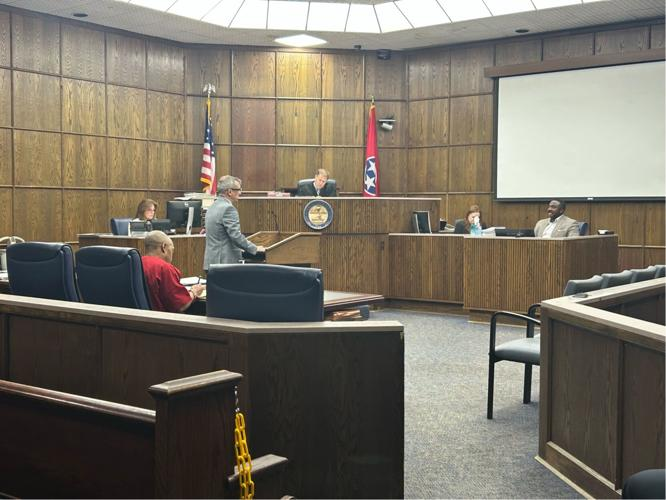
Richard Carpenter was charged after St. Petersburg police said a late-night drone confrontation with a delivery driver escalated into an alleged vehicle intrusion and battery.
A late-night drone confrontation
The case began shortly after midnight on Monday, May 4, 2026, near an apartment complex in St. Petersburg, Florida. Police said 34-year-old contractor Richard Carpenter was operating a small drone while delivery driver John Murray sat inside his Infiniti. According to the arrest account, Carpenter repeatedly flew the drone close to the open driver-side window. Officers characterized the flight path as dangerous because fast-spinning propellers could cause injury if the aircraft struck a person.
Murray was not described as a neighbor involved in an ongoing dispute. Police identified him as a delivery driver whose work brought him through the area. Carpenter reportedly told officers that he believed Murray was following him because he had seen the same vehicle in multiple locations. The arrest report, as summarized by The Smoking Gun, did not establish that Murray had actually been following Carpenter. That belief was instead presented as Carpenter’s explanation for why he focused on the vehicle.
The police narrative says the incident did not end with the drone flights. Investigators alleged that Carpenter approached the Infiniti, reached through the open window and grabbed Murray’s phone. During that contact, the phone allegedly struck Murray near his left eye. Police treated the act of reaching into the occupied vehicle as a much more serious part of the case than simply flying a drone nearby.
What police said they observed
Officers who questioned Carpenter reported signs they associated with alcohol impairment, including an odor of alcohol, glassy eyes and slurred speech. Carpenter reportedly acknowledged drinking before operating the drone, and police said his girlfriend confirmed that he had consumed alcohol. The public case report does not describe a breath test or blood-alcohol result, so the record should not be expanded into a formal drunk-driving allegation. The phrase used in some coverage, ‘droning while intoxicated,’ was a headline joke rather than the name of a separate criminal charge.
Police also described the drone itself as a small unmanned aircraft whose rotating blades could injure a person at close range. That detail mattered to the way investigators characterized the alleged conduct around Murray’s open window. The public report does not say that the drone actually struck Murray or caused a physical injury. The alleged physical contact came later, when Carpenter was accused of reaching into the car and taking the phone.
The distinction matters for accurate reporting. A reckless or threatening drone flight can be part of the factual background, while the burglary-related allegation depended on the claimed entry across the vehicle window and the associated assault or battery. Those are allegations in an arrest record, not a finding by a judge or jury.
Charges, bond and immediate case status
Carpenter was booked on felony and misdemeanor counts, including burglary with assault or battery. The case-specific report says he was released from the county jail on May 7 after posting bonds totaling $150,500. That release is the latest completed substantive event located in the source reviewed for this case, so May 7, 2026 is used as the article’s case date rather than the much later date on which the old site copy happened to be published.
Bond is a pretrial release condition, not a sentence and not proof of guilt. The high total described in the arrest report reflects the charges and court-set conditions at that stage of the case. No later plea, dismissal, verdict or sentencing result was located in the case-specific sources available through August 11, 2026. The article therefore stops at the verified arrest-and-release stage instead of guessing about an outcome.
The source also noted earlier convictions in Carpenter’s record. Those prior cases can help explain why they appeared in police and court reporting, but they do not establish that the new accusations are true. The current case must be judged on its own evidence and proceedings.
Why the identity correction matters
The older Crimes of the Week version described the drone episode without a reliable match between the named suspect and the case-specific source. The verified arrest report coverage identifies the accused as Richard Carpenter, age 34. Because a crime article can cause serious harm when a name or booking photograph is attached to the wrong person, this replacement centers the verified identity and removes the old featured image rather than preserving an image that may belong to someone else.
The corrected article also narrows the claim. Police said Carpenter flew the drone, approached Murray’s car, reached into the vehicle and grabbed a phone. It does not claim that a drone injured anyone, that Carpenter was convicted, or that every detail in an arrest affidavit has been proven. Those limits are important in a case that, in the public record reviewed here, had not yet reached a reported final disposition.
For readers, the durable facts are the date and place, the identity of the accused, the delivery driver’s role, the alleged drone passes, the alleged phone grab, the charges and the May 7 bond release. Later court developments should replace this status if a plea, dismissal, trial result or sentence becomes available.
Case timeline
May 4, 2026: Police say the drone and vehicle confrontation occurred shortly after midnight near Carpenter’s St. Petersburg apartment complex. Officers alleged that Carpenter flew the drone close to Murray’s open window and later reached into the car for Murray’s phone.
May 7, 2026: Case-specific reporting documented Carpenter’s arrest, the felony and misdemeanor counts, and his release after posting a combined $150,500 in bonds. This is the latest verified completed procedural development located for the article.
Current status: No later case-specific plea, dismissal, verdict or sentence was located in the available case-specific sources. If a later court record becomes available, it should control the case status and publication date.
Additional record context
The chronology also explains why the burglary allegation can sound surprising in a case that began with a drone. Florida police did not describe Carpenter as breaking into an apartment or stealing from a house. Their theory was that he crossed the boundary of an occupied vehicle window while committing an assault or battery. The article therefore uses the charge name as reported without suggesting a conventional residential burglary.
Murray’s occupation as a delivery driver is another useful corrective detail. Carpenter reportedly told officers he had seen Murray’s vehicle in different places and believed he was being followed. Police, however, identified Murray as someone whose job required him to drive to many locations. The available source does not report evidence validating Carpenter’s suspicion.