Florida Crime Report
A Florida jury acquitted Krystl Watts after prosecutors accused her of spraying a man with Silly String and throwing the empty can.
Summary
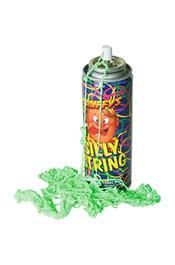
Police accused Watts of spraying Jessee Hammock with Silly String until the aerosol can was empty.
Investigators also alleged that she threw the can, causing a laceration to Hammock’s forehead.
Watts was arrested for misdemeanor battery and initially held on a $1,000 bond.
The case continued to a jury trial rather than ending through a plea agreement.
On April 9, 2026, jurors found Watts not guilty.
The acquittal means the prosecution did not prove the charge beyond a reasonable doubt.
The final article must therefore describe Watts as acquitted rather than leaving the original arrest allegation unresolved.
1. The Crime or Misconduct
Police accused Watts of spraying Jessee Hammock with Silly String until the aerosol can was empty.
Investigators also alleged that she threw the can, causing a laceration to Hammock’s forehead.
The central legal question is whether the evidence proves the charged conduct or supports the reported disciplinary outcome. The unusual object, food, slogan, vehicle or social-media angle may explain why the case attracted attention, but it does not alter the required burden of proof.
2. Crime Location
The reported event occurred at OCC Road House in Clearwater, Florida. Exact residential addresses and unnecessary identifying information are omitted.
3. Date and Time
The relevant reported date or period was 2025, during a confrontation at the restaurant and entertainment venue. Later procedural developments are reflected in the case-status section.
4. Police Department or Investigating Authority
The matter was handled by Clearwater-area law enforcement. Court and disciplinary bodies may have become involved after the initial investigation.
5. Defendant or Subject Name
The person or people identified in the public record were Krystl Watts.
6. Age
The reported age or age range was 48.
7. Charges or Proceeding
The principal charge or proceeding was Misdemeanor battery.
The precise wording of a charge can change through amendment, reduction, plea negotiations or verdict. This article uses the most recent verified description available.
8. Bond Amount or Custody
Initially held on $1,000 bond.
9. Conviction
The matter reached the following verified disposition: Resolved by jury acquittal on April 9, 2026. That outcome replaces the earlier arrest-only framing.
10. Sentence
The reported sentencing or remedial result was: A jury returned a not-guilty verdict.. The article avoids adding penalties that were not found in the public record.
11. Outcome
A jury returned a not-guilty verdict.
Administrative actions such as termination, no-contact orders or professional discipline are separate from a criminal conviction unless the public record states otherwise.
12. Victim
Jessee Hammock, 33, who reportedly suffered a forehead cut.
Private addresses and unnecessary personal details are not included. Minor victims are not identified.
Victim Name
The victim information is limited to what was necessary and publicly reported above.
Victim Age
Any publicly reported victim age is included above. No age is inferred when the source did not provide one.
The publicly available record is unusually compact. The arrest affidavit supplied the allegation, the reported forehead injury and the battery charge; later court reporting supplied the jury outcome. No reliable report reviewed for this update identified a separate conviction, sentence or later prosecution arising from the same Silly String incident. The article therefore treats the matter as resolved by acquittal while retaining the original allegation only as background to explain why a criminal case existed.
Evidence and Public Record
The distinction matters because the physical injury described in the arrest affidavit did not decide the case by itself. Police may arrest on probable cause, while a trial asks whether the prosecution has proved every required element beyond a reasonable doubt. The April 2026 verdict therefore supersedes arrest-stage descriptions that said Watts merely “faced” a battery charge.
Florida’s battery statute generally requires proof that a person actually and intentionally touched or struck another person against that person’s will, or intentionally caused bodily harm. A standard battery is ordinarily a first-degree misdemeanor unless another provision changes the classification. In this case, prosecutors had to prove the charged battery beyond a reasonable doubt at trial. The jury’s not-guilty verdict means the state did not obtain a conviction under that burden of proof.
What Florida Battery Law Required
The case did not end at the arrest stage. On April 9, 2026, a jury returned a not-guilty verdict after a brief trial. That verdict is the controlling disposition. The allegation that produced the arrest remains part of the case history, but it is not a conviction and should not be described as one. The acquittal also means that bond information and the initial charging decision are procedural history rather than the final outcome.
The case began with a September 2025 arrest after Pinellas Park police said Watts confronted 33-year-old Jessee Hammock at the OCC Road House in Clearwater. According to the arrest affidavit summarized by local reporting, Watts sprayed Hammock with Silly String and then threw the empty can, striking his forehead and causing a laceration. Watts was booked on a misdemeanor battery count and later released on bond. The early reports did not identify a clear motive for the confrontation, so the accusation itself should not be expanded beyond what investigators placed in the affidavit.
From the Arrest to the Jury Verdict
Case Record Context
The final procedural result changes how the earlier police account should be read. Watts was arrested after officers documented the accusation involving Silly String, the empty can and Hammock’s forehead injury, but an arrest affidavit records allegations rather than a finding of guilt. The case ultimately went before a jury, giving prosecutors the burden of proving misdemeanor battery beyond a reasonable doubt. On April 9, 2026, the jury returned a not-guilty verdict. That verdict controls the present status of the case. The earlier arrest, bond and injury allegations remain part of the history because they explain why the prosecution began, but they do not amount to a conviction. No criminal sentence followed the acquittal. For that reason, the case is best understood as a completed prosecution in which the state brought a battery allegation to trial and the jury rejected it.
Sources
This article is based on police records, court reporting and publicly available source material reviewed through July 30, 2026. An arrest or criminal charge is not proof of guilt. Later court developments may require an additional update.